OFEP Cybersecurity
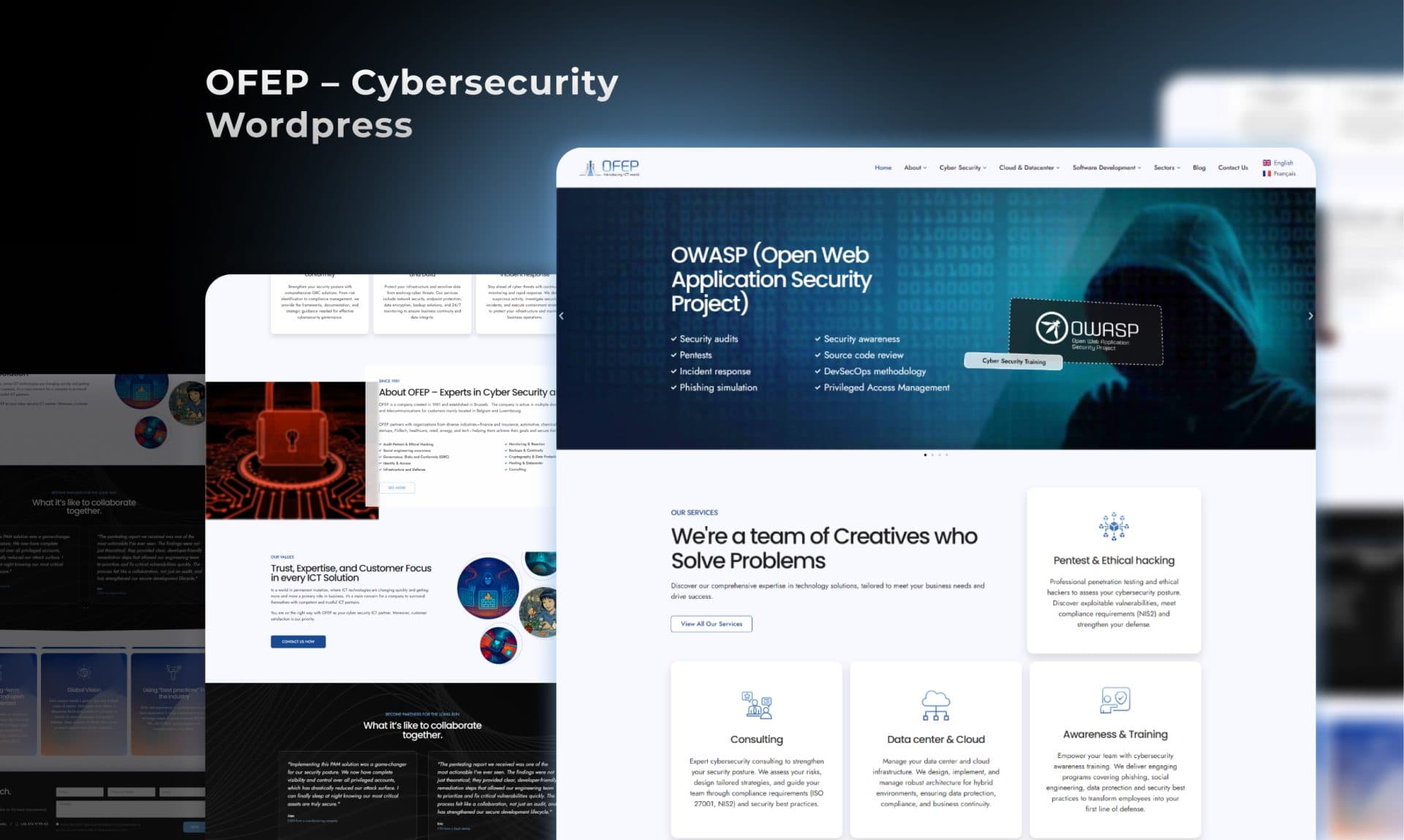
OFEP came to us with a working product and a problem: it looked and behaved like software from a different decade. Enterprise clients were hesitant to put it in front of boards and external stakeholders, and internal users — including non-technical compliance officers — were struggling with the dense, inconsistent interface.
The brief
Security software that security teams could actually use.
OFEP came to us with a working product and a problem: it looked and behaved like software from a different decade. Enterprise clients were hesitant to put it in front of boards and external stakeholders, and internal users — including non-technical compliance officers — were struggling with the dense, inconsistent interface.
The brief was a complete UI overhaul: redesign every screen, unify the visual language, and make the most common user tasks faster and clearer without changing any of the underlying functionality. The product worked; it just needed to feel like it did.
It finally looks like software we're proud to show clients, not something we apologise for before a demo.
The challenge
Complex data. Simple interface.
Cybersecurity data is inherently dense — threat scores, compliance statuses, audit logs, network maps. Three design constraints made this harder than a typical SaaS redesign:
- ✓No information loss. Security teams need the detail. The redesign had to simplify the experience without hiding the data that analysts depend on.
- ✓Two distinct audiences. The same product served deeply technical security engineers and non-technical compliance officers. The hierarchy had to work for both.
- ✓Zero regression risk. With active enterprise clients, any change to familiar patterns had to be introduced deliberately. We phased the redesign to avoid disrupting workflows mid-engagement.
And the frontend had to perform — complex dashboard views with real-time data can't feel laggy.
Our approach
Understand before redesign.
Six weeks is tight for a full app overhaul. We front-loaded the research so every design decision was grounded, not guessed.
- 01
Audit & task analysis
Documented every screen, flow, and user task. Identified the 20% of interactions that drove 80% of daily use.
- 02
User research
Interviews with three security engineers and two compliance officers — the actual users, not just the buyer.
- 03
Information architecture
Restructured the navigation and dashboard hierarchy around job tasks, not data categories.
- 04
Design system
A dark-first component library with consistent data visualisation patterns, type scale, and colour semantics for threat levels.
- 05
UI design
Hi-fi designs for every screen, with interaction states, empty states, and error handling all specified.
- 06
Frontend build
React component build, WCAG 2.1 AA compliance pass, and handoff documentation.
Selected screens
The work in detail.
The results
What shipped, and what it moved.
Average time to complete the five most common security workflows dropped 60% in post-launch usability testing.
The redesigned app scored 92 on Lighthouse despite the data density of a real-time security dashboard.
Zero critical accessibility failures — WCAG 2.1 AA compliant, tested with screen readers and keyboard navigation.
Every screen, every flow, every state — redesigned, documented, and handed off with a component library.
Tech stack
Modern tools.
Clean output.
We choose the right tool for every job and write clean, documented code that your team — or any developer — can maintain after handoff.
"It finally looks like software we're proud to show clients. Our demo-to-close rate improved almost immediately after the redesign went live."
Ready to start?
Have a project like this? Let us build it.
Tell us what you are building and we will reply within 24 hours with honest, practical next steps.