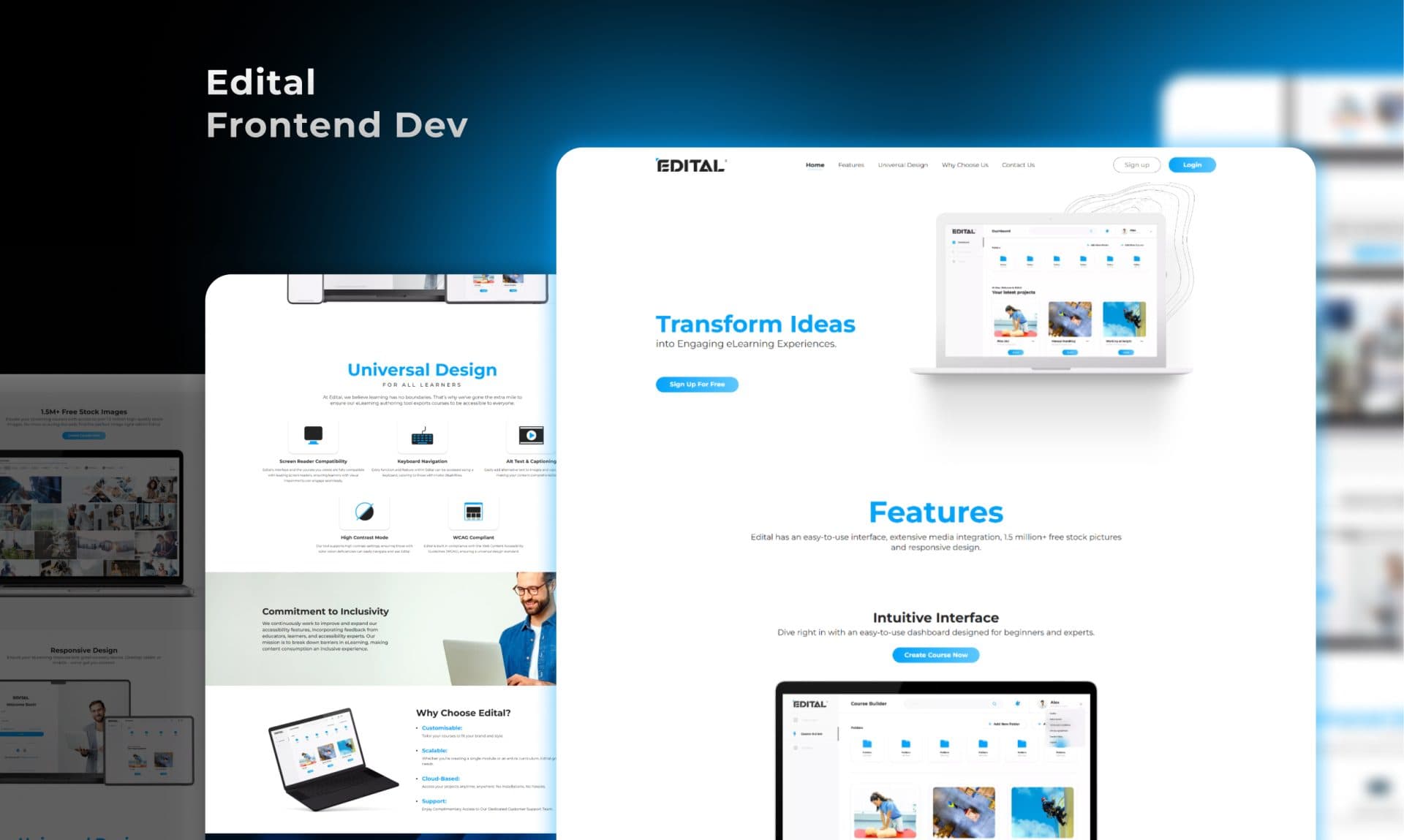
SaaS · USA
UI/UXFrontend
Edital
Full product redesign shipped
A full-stack SaaS directory platform connecting US vehicle owners with verified local towing businesses — built end-to-end with a public SEO directory, business owner dashboard, and a comprehensive admin panel.
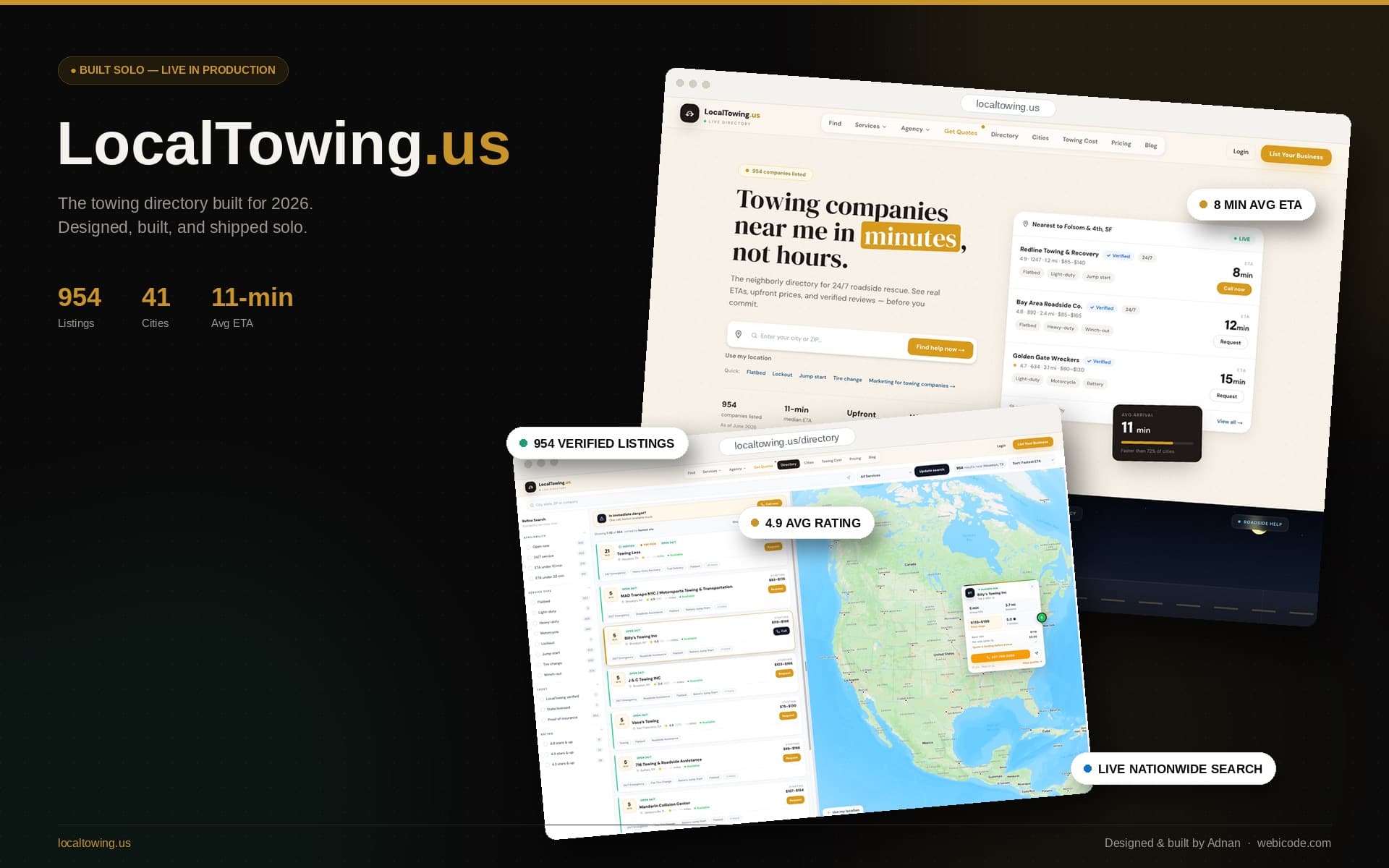
The problem
Drivers in an emergency turn to Google Maps or call the first number they see — with no reliable way to compare services, check if a provider is licensed, or filter by availability. Meanwhile, small towing businesses have no dedicated platform to manage their online presence or capture inbound leads from organic search.
The goal was to build both sides of that marketplace from scratch: a public directory optimized for organic discovery at the city and state level, and a complete set of tools for business owners to manage listings, capture leads, and grow — with an admin panel capable of managing hundreds of businesses at scale.
"Every architectural decision — from URL structure to DB schema — had to serve both the driver who finds a tow truck and the operator who runs the business."
No white-label template, no vendor CMS, no hosted SaaS. A production-grade Node.js monorepo, built from the ground up, deployed to a single server, and running live traffic.
The challenge
Three fundamentally different engineering problems had to be solved inside one product — and most of them pull against each other.
And the SEO content engine — Q&A, blog, cost guide, service pages — had to be server-rendered and maintainable without a headless CMS adding another deployment dependency.
The approach
The data model drives everything in a directory platform. Designing the 22-model schema and URL hierarchy before any UI work meant the frontend and API could evolve together without structural rewrites.
Mapped the multi-sided marketplace: 22 PostgreSQL models covering businesses, users, leads, billing, content, analytics, chat, and outreach — before any UI work.
Multi-level directory with state, city, ZIP, name search, and company profile routes — each server-rendered with unique metadata, JSON-LD structured data, and canonical tags.
Self-serve listing creation with approval-gated public visibility, lead inbox, real-time availability toggle, and plan upgrade flow.
Q&A, blog, towing cost guide, and six service landing pages — typed content models, fully server-rendered, and internally linked for long-tail discovery.
Fourteen management modules — businesses, users, leads, billing, reviews, analytics, blog, CRM, and outreach — all in a custom Next.js feature module with RBAC and audit logging.
Custom server.js and hostinger-build.mjs to run the Next.js build and Express API as a single Node.js process on Hostinger's single-process deployment model.
Selected screens
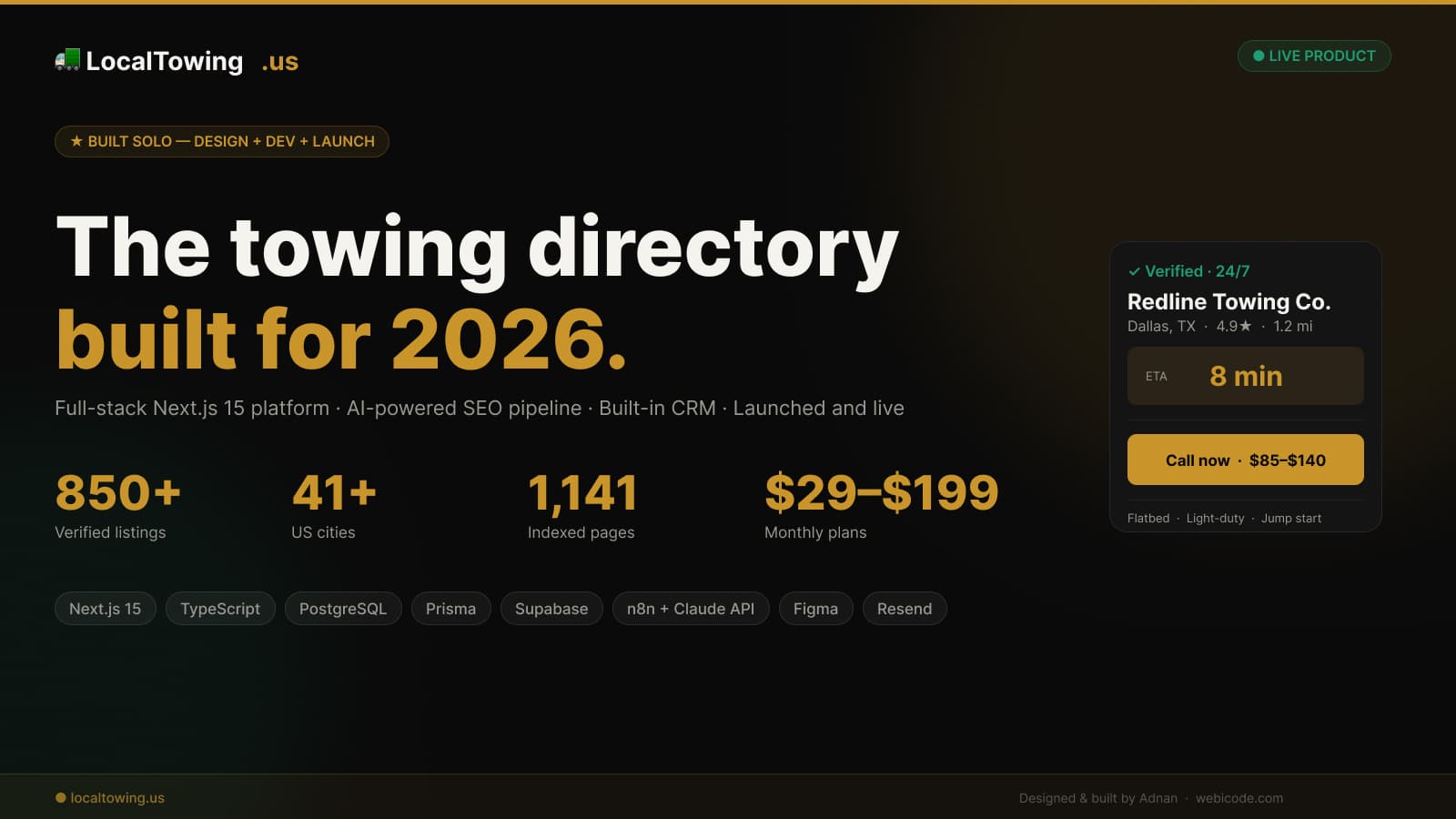
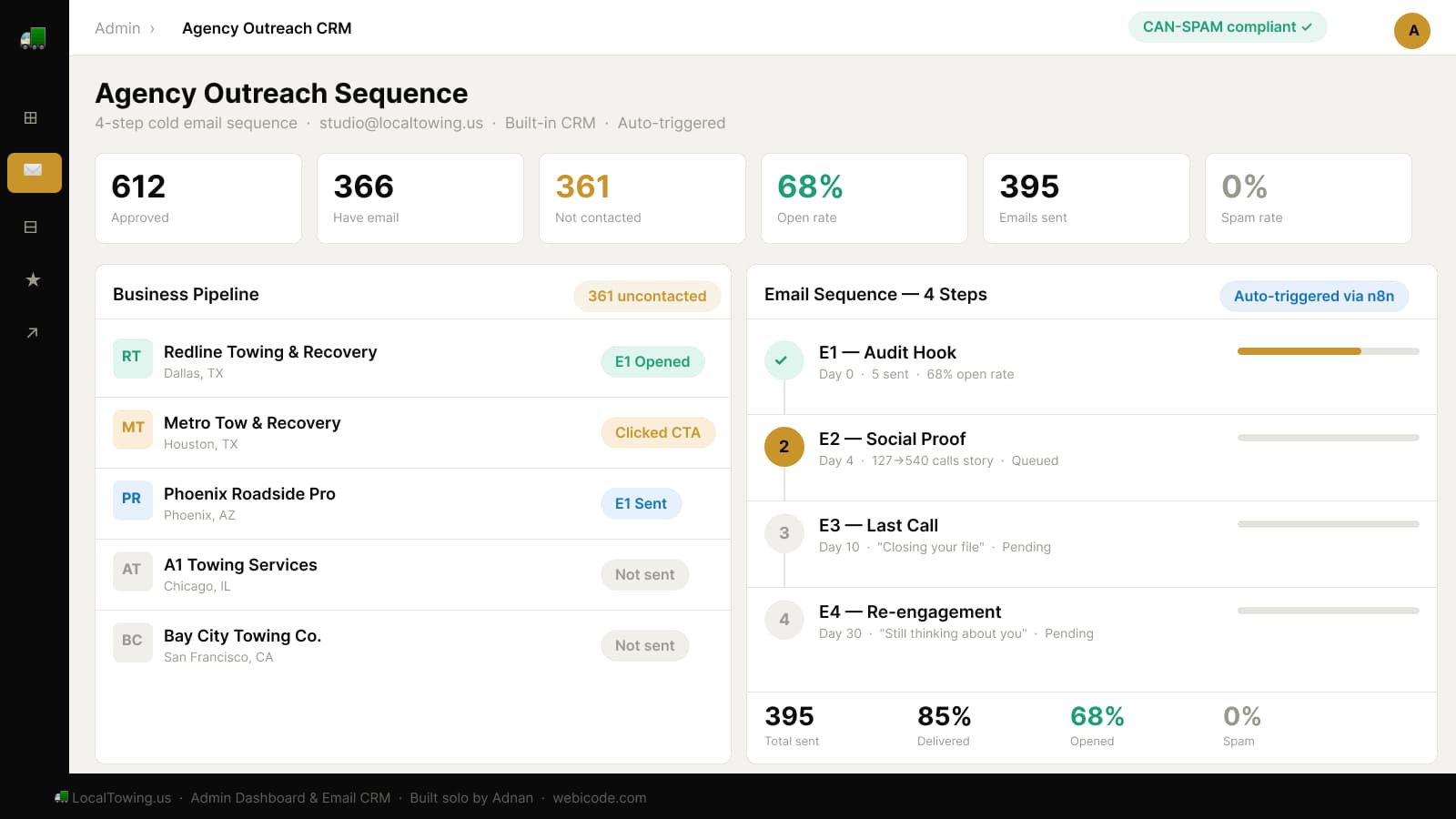
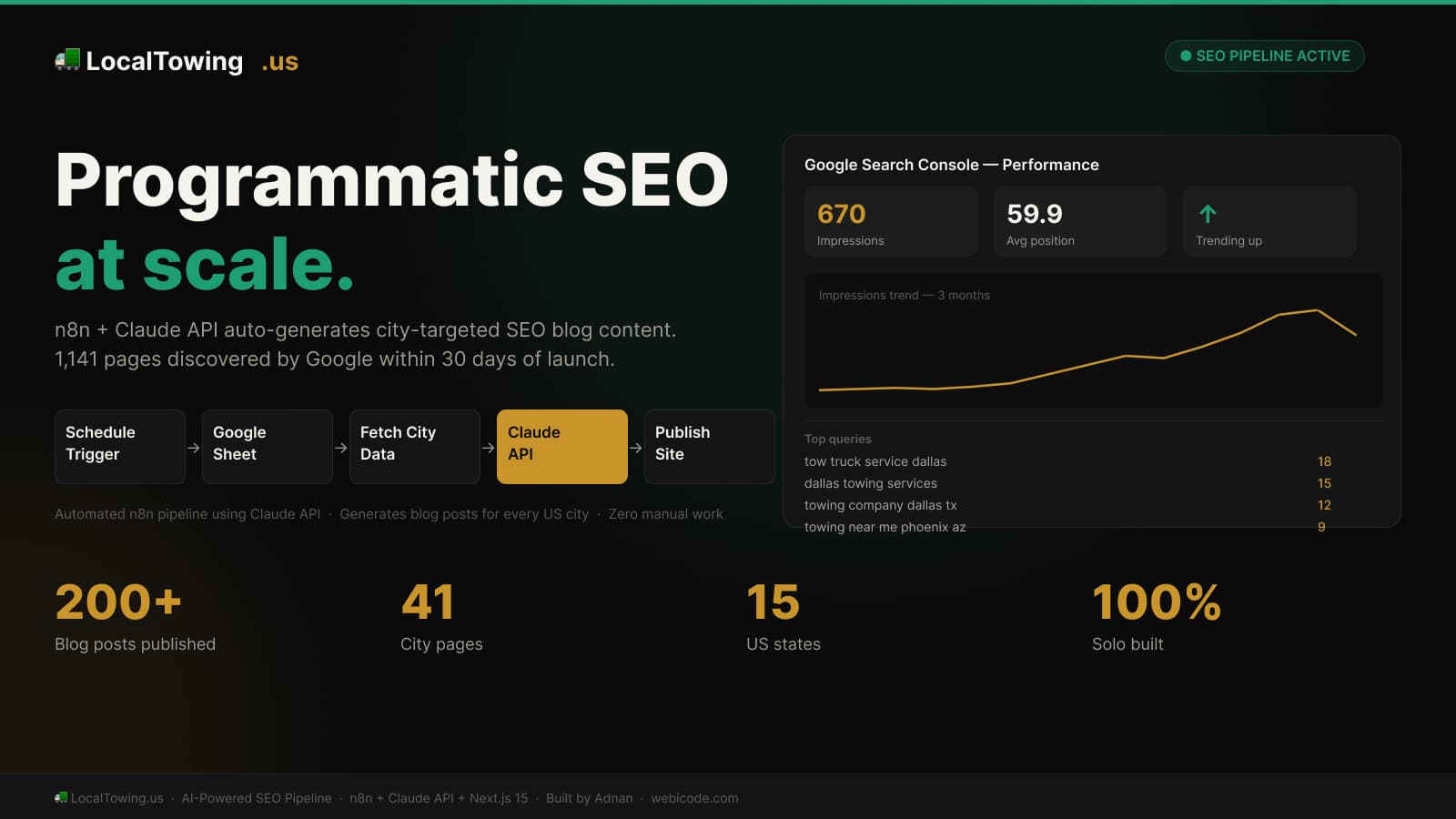
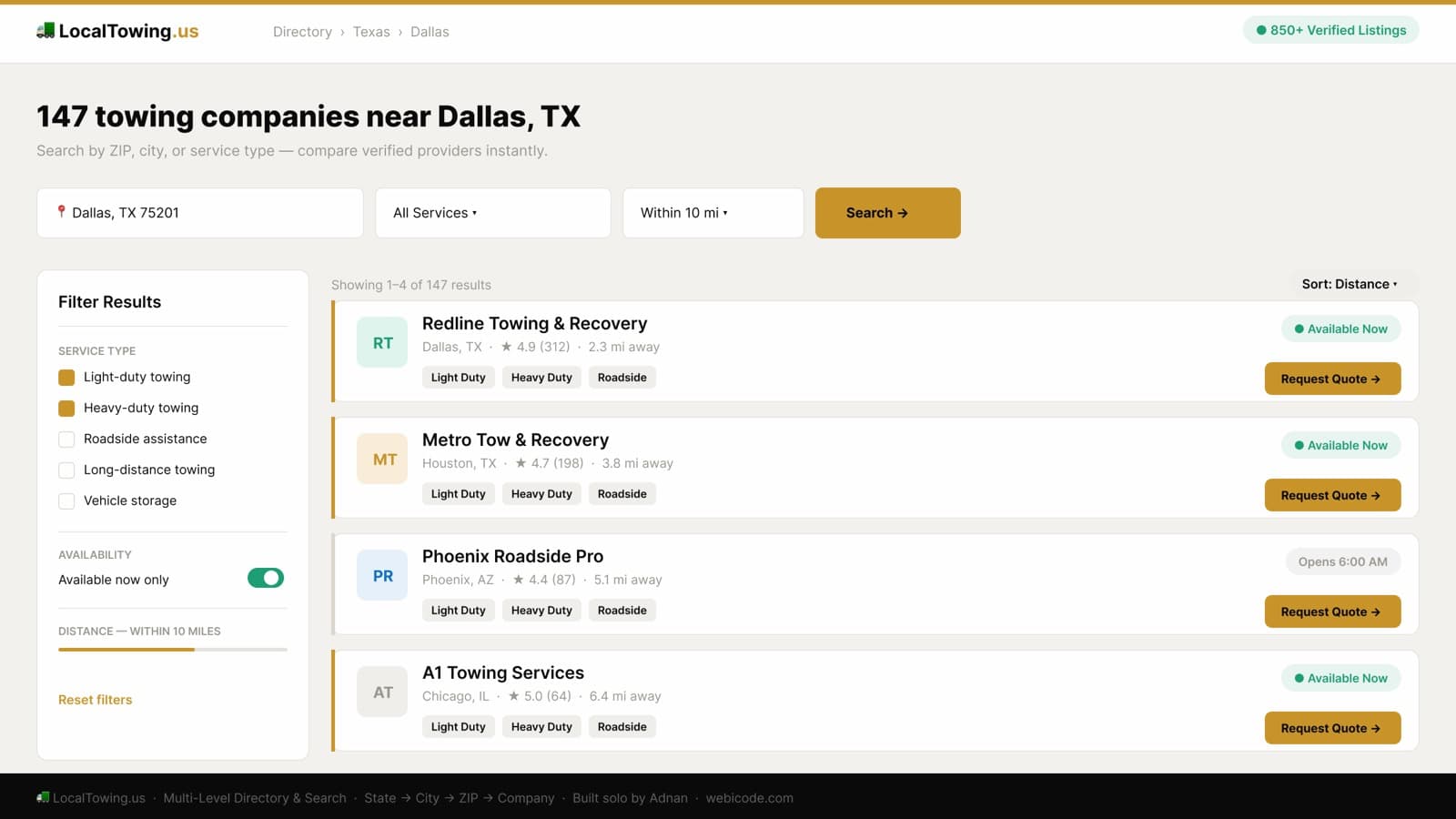
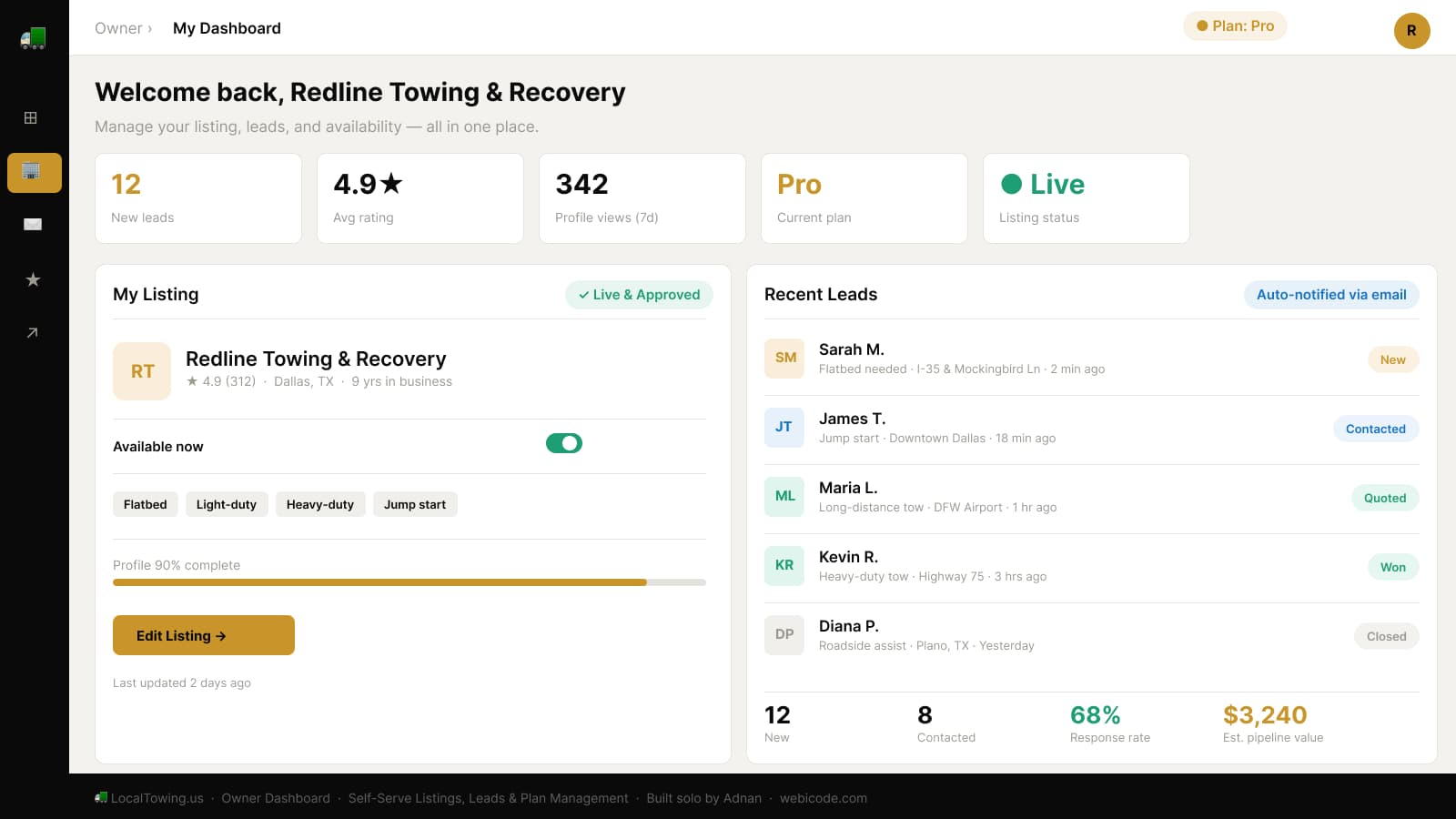
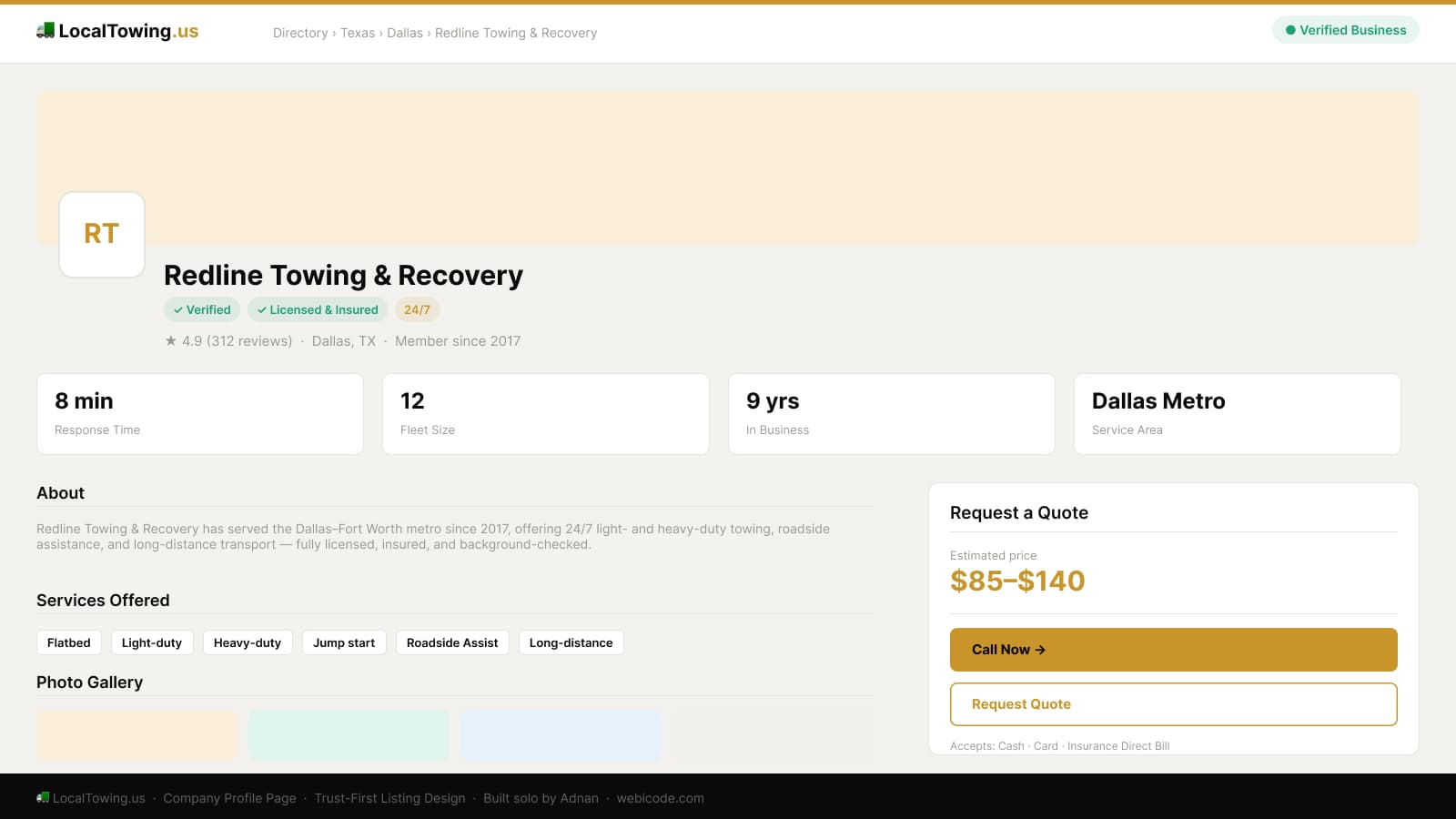
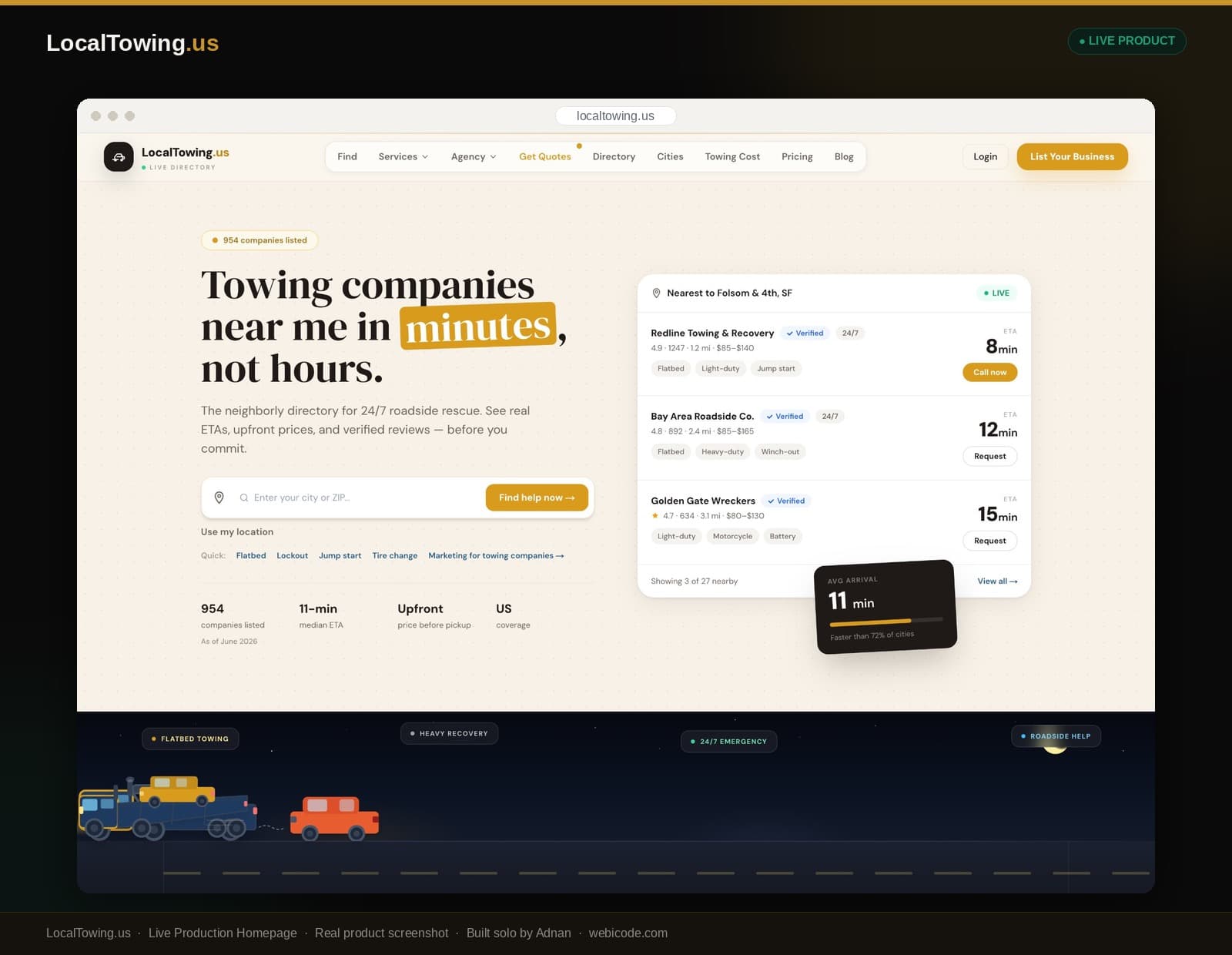
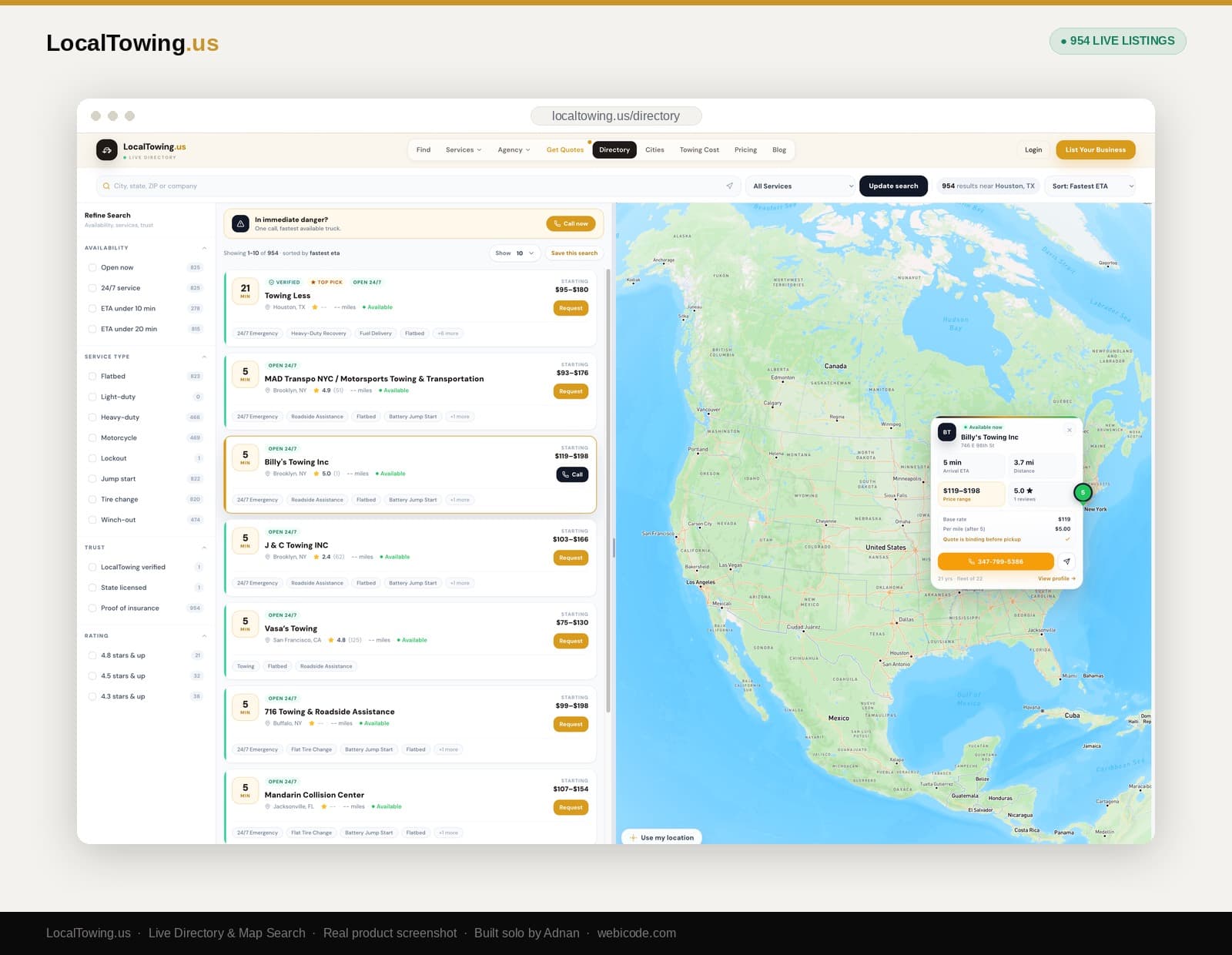
Public directory, business owner dashboard, and admin panel — three distinct products sharing one codebase and one design language.
The results
PostgreSQL schema covering a complete multi-sided marketplace: businesses, users, reviews, leads, billing, chat, analytics, and outreach.
State, city, ZIP, company profiles, services, blog, Q&A, jobs, and vendor listings — all server-rendered and indexed.
Businesses, users, leads, invoices, reviews, analytics, blog, chat, CRM, and agency outreach — all custom-built, no framework.
A documented Node.js monorepo: no per-seat SaaS fees, no vendor lock-in, full source control from day one.
Tech stack
A Node.js monorepo with two workspaces — Next.js App Router for the frontend and Express + Prisma for the API — unified into a single production process. No per-seat SaaS fees, no vendor dependencies beyond the infrastructure it runs on.
"Building the SEO directory a driver finds on Google and the dashboard an operator checks every morning in one codebase teaches you more about product architecture than any single-concern project can."
More work
Ready to start?
Tell us what you are building and we will reply within 24 hours with honest, practical next steps.